Court Cards Explained

Sixteen Royals - Zero Confusion

The court cards tarot are famous for causing drama in spreads—are they people, moods, messengers, or all of the above? This hub pulls all 16 court cards into one place so you don’t have to chase meanings across the site. Think of it as your calm, central command for tarot court cards meanings—organized, readable, and actually useful when a Princess side-eyes your question or a King hijacks the reading.

What you’ll find here: clear profiles for Princess, Prince, Queen, and King across the suits, quick cues for how to read court cards in real questions, and the system that makes them make sense (yes, including the Kabbalah layer). Short on fluff, big on “ohhh—that’s what this card is doing.”

First up, a quick note on naming—the Page/Knight vs Princess/Prince thing—and why our approach sticks to a royal family that actually behaves on the Tree of Life.

Want a quick read on your Court Card? Pick a rank and suit to get the fast scoop

Pages & Knights vs. Princesses & Princes

Medieval LinkedIn (Traditional System)

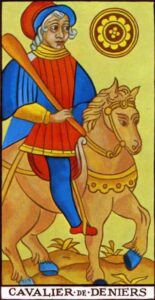
The earliest tarot decks of 15th-century Italy weren’t thinking in HR metaphors at all — their suits had Knave (fante), Knight (cavallo), Queen, King. When the cards crossed into France, printers relabeled them in French as Valet and Cavalier (hello, Tarot de Marseille). Fast-forward to English-speaking tarot circles and the knave/valet got upgraded to Page, while the horseman stayed Knight.

However you name them, the hierarchy is the same — a neat little office chart:
court cards tarot

  • court cards tarotPage/Valet/Knave = the intern. Carries messages, gets everyone’s coffee order wrong.

  • Knight/Cavalier = middle management on horseback. Always moving, rarely thinking.

  • Queen = the one actually running the show.

  • King = takes the credit at the annual banquet.

This Page/Knight system is straight out of European playing cards: practical, relatable — but not wired for mystical depth.


Occult Soap Opera (Princess/Prince System)

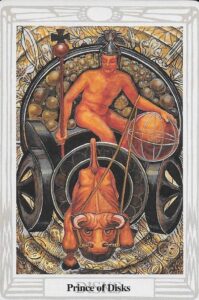
Then along came the Golden Dawn and Aleister Crowley’s Thoth Tarot, and suddenly the court cards tarot got a new casting call:
 

court cards tarot

  • Princess replaces thecourt cards tarot Page.

  • Prince replaces the Knight.

  • Queen stays Queen.

  • Knight steps into the role of Father — fiery, active, and closer to the old King archetype, but always depicted in motion.


Why the shuffle? To align the courts with the Tree of Life in Kabbalah. Instead of just feudal job titles, they become a family of archetypes:

  • Princess = Malkuth (Daughter, the Kingdom, the earth at your feet).

  • Prince = Tiferet (Son, the central heir, balance and harmony).

  • Queen = Binah (the Mother, structure and understanding).

  • Knight = Chokmah (the Father, fiery creative force on horseback).

This system maps directly to the Tetragrammaton (YHVH) and creates a living cycle of generational energy. Want more detail? See Kabbalah Basics for Tarot Readers.


Take your exploration of Tarot and Kabbalah further

Learn to apply these insights in readings with the Kabbalistic Tarot course

Side-by-Side: The Two Systems

Aspect

Traditional (Page/Knight)

Occult/Kabbalistic (Princess/Prince)

Origins

15th-century Europe, modeled on playing cards.

19th-century Golden Dawn & Thoth Tarot.

Ranks

Page, Knight, Queen, King

Princess, Prince, Queen, Knight

Roles

Intern, horse guy, mother, ruler

Daughter, son, mother, father

Symbolism

Social hierarchy

Family archetypes tied to Kabbalah

Tree of Life links

Loosely implied

Princess = Malkuth, Prince = Tiferet, Queen = Binah, Knight = Chokmah

Vibe

Medieval HR department

Cosmic royal soap opera


Why It Matters (and Why You’re Confused)

Here’s the deal: the court cards tarot aren’t just pretty faces at the royal banquet — they’re the personalities that crash your readings, and how you label them actually changes how you read them.

If you stick with Pages and Knights, you’ve got a medieval org chart:

  • Pages = interns, letters, kids, messages.

  • Knights = action, movement, change.

  • Queens = nurturers, builders.

  • Kings = bosses, deciders.

Clear? Sure. But flat. It works if you’re just reading day-to-day energy, but it doesn’t plug into the deeper wiring of the deck.

Now flip to the Princess/Prince system, and suddenly the court isn’t HR — it’s a family drama playing out on the Tree of Life.

  • Princess (Malkuth) isn’t just “a young girl card.” She’s the entire Kingdom, the ground beneath the Tree, the final manifestation. When she shows up, something’s taking form in real life.

  • Prince (Tiferet) isn’t just “that Knight in motion.” He’s the heir, the solar center, the one who connects above and below. When he shows up, there’s alignment (or conflict) between your ideals and your reality.

  • Queen (Binah) isn’t just mom with tea. She’s the Great Mother, the form-giver, the one who shapes chaos into structure.

  • Knight (Chokmah) isn’t just dad yelling orders. He’s the fiery Father, the impulse, the seed of raw creative power charging forward.

Why does this matter? Because using tarot without this structure is like trying to watch a Shakespeare play where half the characters are missing. You’ll catch the costumes, but the plot won’t make sense.

The Princess/Prince system doesn’t just rename the cards — it wires them into the Tree of Life, giving them actual context. A Princess is more than a Page, because she carries the weight of the Kingdom. A Prince is more than a Knight, because he rules the middle ground of the Tree.

So the next time you pull a court card tarot and feel stumped, ask: am I looking at a medieval job title, or am I reading the script of a cosmic family drama? That’s the difference.


👉 And now that we’ve sorted out who’s who, let’s actually meet all 16 of them suit by suit in the grids below.

Proof the best things in life really are free

Our FREE TAROT TOOLS HUB → is yours to explore, no strings attached
FREE